
Safety Valves, Low-Water Cutoffs and the Devices That Protect Your Boiler
Compliance & Safety · 5 min read ·
The short answer
Three families of devices protect a boiler: spring-loaded safety valves sized to vent the boiler's full output if pressure climbs too high, low-water cutoffs that stop the burner before the boiler can dry-fire, and flame supervision that shuts off fuel the moment the flame is lost. They only protect you if they are tested on schedule and never bypassed.
A steam boiler is a pressure vessel with a fire inside it. Run properly, it is one of the most predictable machines in a plant. What keeps it predictable when something goes wrong is a small set of devices whose whole job is to act in the seconds when no human can.
Every plant owner should know what these devices are, what they protect against, and why the rule about them is absolute: tested regularly, bypassed never.
safety valves: the last line against overpressure
A safety valve is a spring-loaded valve held shut against boiler pressure. If pressure climbs past the set point, the spring yields, the valve pops open, and steam vents until pressure falls back to a safe level. No electronics, no operator — physics does the work.
The critical detail is sizing: the valves on a boiler are selected to vent the boiler's full steam output. Even if the burner runs flat out with every other control failed, the valves alone can relieve everything the boiler can produce.
Because they are the last line, they are tested — typically at the annual statutory inspection, where the inspector wants evidence they lift at set pressure and reseat cleanly. A safety valve corroded shut is a boiler with no last line at all.
the low-water cutoff, and the classic boiler killer
The most common way boilers get destroyed is dry-firing: the burner keeps running while the water level falls, until flame is heating steel that has no water behind it. Steel loses strength quickly at those temperatures, and the damage ranges from expensive to catastrophic.
The low-water cutoff exists to make that impossible. When the water level drops to a preset limit, it cuts the burner off — no debate, no delay. Many boilers carry two cutoffs so a single stuck float or fouled probe cannot leave the boiler unprotected.
Cutoffs must be tested on the schedule the manual prescribes, because a float chamber full of sludge is a cutoff in name only. This is also why feedwater treatment matters to safety, not just efficiency.
flame supervision: no flame, no fuel
If the flame goes out but the fuel valve stays open, the furnace fills with unburned fuel — and the next ignition source turns that into an explosion hazard. Flame supervision prevents it: a sensor continuously proves the flame exists, and the moment it disappears, the fuel valve shuts.
The burner then locks out and demands a fresh purge — sweeping the furnace with air — before any relight is attempted. Operators should treat a flame-failure lockout as information, never as an inconvenience to be reset repeatedly until the boiler stays lit.
tested, never bypassed
Serious boiler incident investigations tend to find the same thing: a protective device that was known to be faulty, wired around, tied down, or ignored. A bypassed device is worse than a missing one, because everyone believes the protection is still there.
The working culture is simple. Devices get tested on schedule and the tests get logged. A device that fails a test stops the boiler until it is repaired. And every trip is treated as the device doing its job — the question is always why it tripped, never how to keep running.
modern packaged boilers make this easier
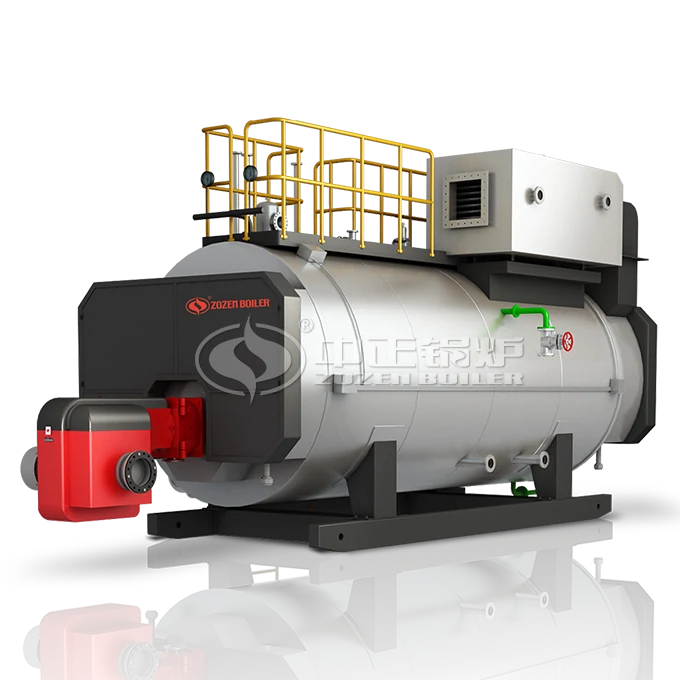
On a modern packaged unit such as a WNS series fire-tube boiler, these protections arrive integrated and are proven out at commissioning: safety valves sized to the rated output, water-level protection, and full flame supervision on the burner. Zozen Philippines walks operators through each device during commissioning, and you can see where they sit on the machine in the 3D boiler builder on our site.
The hardware, though, is only half the system. The other half is a plant culture that tests it, logs it, and never bypasses it.
Quick questions
What does a low-water cutoff do on a boiler?
A low-water cutoff shuts the burner off automatically when the boiler's water level falls to a preset limit. It prevents dry-firing — flame heating steel with no water behind it — which is the most common way boilers are seriously damaged. Because floats and probes can foul, cutoffs must be tested on the schedule in the boiler manual, and many boilers carry two for redundancy.
Why are boiler safety valves sized to vent the boiler's full output?
Safety valves are the last line of defense, so they are sized for the worst case: the burner firing at maximum with every other control failed. Sized to relieve the boiler's full steam output, the valves alone can keep pressure from climbing past safe limits even with nothing else working. They are typically tested at the annual statutory inspection to prove they lift at set pressure and reseat.
Is it ever acceptable to bypass a boiler safety device?
No. A bypassed device is more dangerous than a missing one, because everyone assumes the protection still exists. If a safety valve, low-water cutoff, or flame supervision system fails a test, the correct response is to take the boiler offline until the device is repaired. Every trip of a protective device should be investigated, not reset and ignored.
Talk this through with an engineer
Tell us your process and fuel — we'll reply within one business day.