
Coconut Processing and Biomass Boilers: Fuel From Your Own By-Products
Industry Guides · 6 min read ·
The short answer
Coco shell is a dense, well-behaved boiler fuel produced right where coconut processors need heat, so burning it turns a disposal cost into a steam supply. Chain-grate boilers handle shell and husk continuously, and plants displacing diesel with by-product fuel typically see payback in roughly six to twelve months, depending on local fuel prices. Pair the biomass unit with a backup fuel and a covered fuel store so supply gaps never stop the plant.
Every coconut mill has the same pile out back: shells. Hauling them away costs money; leaving them costs space. Meanwhile the same plant is burning purchased diesel to make heat for drying and processing. The pile and the fuel bill are the same problem wearing two hats.
Coco shell is a genuinely good boiler fuel — dense, clean-burning for a biomass, and produced right where the heat is needed. Turning a disposal cost into a steam supply is one of the most straightforward wins in Philippine agri-processing.
where coconut plants use heat
Drying is the big one: desiccated coconut, copra, and coir products all need sustained drying heat. Steam also feeds cooking and processing stages, and hot water covers washing and sanitation.
Some refining and higher-temperature processes want heat well above what practical steam pressures deliver. That is where thermal oil heaters come in — biomass-fired YLW units can deliver roughly 300°C-class heat while operating below about 10 bar, where a steam system at that temperature would need extreme pressure.
the chain-grate platform
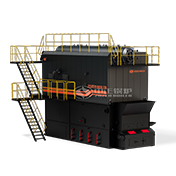
Shell and husk fire well on chain-grate stokers: fuel is fed onto a slowly moving grate, burns as it travels, and ash drops off the end. It is a simple, robust way to burn a variable solid fuel continuously.
For steam, the SZL series covers roughly 6–35 t/h and the smaller single-drum DZL design roughly 2–10 t/h — between them spanning most coconut processing operations. What engineers tend to value in these platforms is the unglamorous stuff: ease of repair, spare parts availability, and predictable uptime.
the economics, honestly stated
Fuel you already own typically beats fuel you buy. Heating with biomass typically costs less per tonne of steam than diesel firing, and in our experience plants that displace a diesel boiler with by-product fuel typically see payback in roughly six to twelve months.
That range is not a promise — it depends on your current diesel price, your shell volumes, and your steam demand. The honest way to evaluate it is with your own numbers: fuel receipts, disposal costs, and metered or estimated steam use.
plan for the gaps
By-product fuel follows the harvest and the production schedule, and both have gaps. Sensible plants keep a covered fuel store sized for the longest expected gap, and pair the biomass boiler with a backup — often a diesel- or LPG-fired unit — so a fuel shortfall never becomes a plant stoppage.
Solid-fuel boilers also need honest housekeeping: ash handling, grate care, and attention to fuel moisture. A rising stack temperature usually means the heating surfaces are fouling and due for cleaning — a rule of thumb worth posting on the boiler house wall.
getting started
The starting point is a fuel-and-load conversation: how much shell you produce, how much heat you use, and when. Zozen has put more than 250 industrial boilers to work across the Philippines — around 2,000 tons of steam capacity in total, with agri-processing among the busiest sectors — and the installations map on the site gives a sense of that footprint.
Factor the permit process into your timeline too: under DOLE Rule 1160, a steam boiler generally needs inspection before first use and at least annually after that. Manufacturing typically takes about 60 days from order confirmation, and a typical project is producing steam within five to six months of ordering.
Quick questions
Is coconut shell a good boiler fuel?
Yes. Coco shell is dense and burns well on chain-grate biomass boilers, and because it is produced on site as a processing by-product, it turns a disposal cost into a heat supply. Practical points to check are fuel moisture, ash handling, and supply continuity across the harvest calendar — most plants keep a covered fuel store and a backup-fuel boiler for gaps.
What type of boiler burns coco shell and husk?
Chain-grate stoker boilers are the usual platform: fuel travels on a moving grate, burns along the way, and ash discharges continuously. Typical steam ranges are roughly 6–35 t/h for double-drum chain-grate designs and roughly 2–10 t/h for smaller single-drum units. For processes needing around 300°C, biomass-fired thermal oil heaters deliver that heat at low pressure.
How quickly does switching from diesel to coconut-shell firing pay back?
In our experience, plants that displace a diesel-fired boiler with by-product biomass typically see payback in roughly six to twelve months — but this is a typical range, not a guarantee. The real number depends on current local diesel prices, how much shell the plant produces, and its steam demand, so it should always be calculated with the plant's own figures.
Talk this through with an engineer
Tell us your process and fuel — we'll reply within one business day.