
Fire-Tube vs Water-Tube Boilers: WNS and SZS Explained Simply
Choosing a Boiler · 6 min read ·
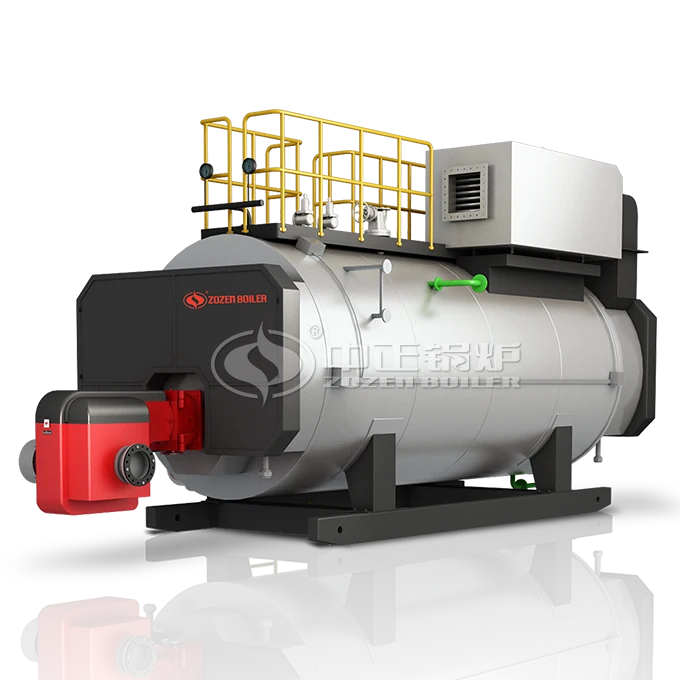
The short answer
In a fire-tube boiler like the WNS, hot gases pass through tubes surrounded by water; in a water-tube boiler like the SZS, water passes through tubes surrounded by hot gases. Fire-tube wins on packaged simplicity and load buffering in the 1–20 t/h range where most plants live. Water-tube wins when you need big capacity or higher pressure — the SZS runs from roughly 2 up to 110 t/h.
When suppliers start talking fire-tube versus water-tube, many plant owners quietly tune out. That is a mistake, because this one distinction drives price, footprint, delivery time, and how the boiler behaves when your production line surges.
The good news: the difference is genuinely simple, and once you see it, the right choice for your plant usually becomes obvious.
how a fire-tube boiler works
In a fire-tube boiler, the fire is inside the tubes. The burner fires into a large furnace tube, and the hot gases then pass through bundles of smaller tubes, all submerged in a shell full of water. Heat crosses the tube walls and boils the water around them.
Our WNS series is this type — a three-pass wet-back design, meaning the gases travel the length of the boiler three times before leaving, and the rear turnaround chamber is water-cooled rather than lined with refractory brick. Three passes wring more heat from the fuel; with a condensing economizer fitted, efficiency can reach up to approximately 98%. The whole machine ships as one packaged unit covering roughly 1 to 20 t/h.
how a water-tube boiler works
A water-tube boiler flips the arrangement: the water is inside the tubes, and the fire surrounds them. Walls of tubes form the furnace itself, connecting an upper steam drum and a lower water drum — viewed end-on, the SZS series makes a D shape, which is why engineers call it a D-type.
Because the pressure is contained in many small tubes rather than one large shell, a water-tube boiler can be built for much higher capacities and pressures. The SZS series spans roughly 2 to 110 t/h, well beyond where any fire-tube design can follow.
where the WNS fire-tube wins
For most Philippine plants — canneries, feed mills, laundries, dyehouses, distilleries — steam demand falls inside the WNS range, and the packaged format is a real advantage. The boiler arrives factory-assembled and factory-tested, so installation is measured in days rather than months.
There is also an operating benefit that is easy to overlook. A fire-tube shell holds a large volume of hot water, and that stored energy buffers demand spikes — a rule of thumb worth remembering if your process opens several steam valves at once, as retort banks and sterilizers tend to do. Fewer parts and a simpler layout also mean simpler maintenance.
where the SZS water-tube wins
Once demand climbs past what a shell boiler can physically contain — large food complexes, paper mills, chemical plants, sites feeding steam turbines — water-tube is no longer a preference but a necessity. The SZS carries capacity and pressure well beyond fire-tube limits.
Water-tube designs also respond quickly to firing changes, since less water mass has to change temperature. The price is a larger site installation and an operation that rewards experienced hands.
the simple rule
Match the boiler to your load size and load profile. Steady or spiky demand under roughly 20 t/h points to a WNS fire-tube; demand above that, or unusually high pressure, points to an SZS water-tube. In our experience most plants that agonize over this question land firmly in fire-tube territory.
If you want to see how the two are built inside, the 3D boiler builder on the Zozen Philippines site lets you pull both designs apart piece by piece — and the products catalog lists the full capacity tables for each series.
Quick questions
What is the difference between a fire-tube and a water-tube boiler?
In a fire-tube boiler, hot combustion gases travel through tubes surrounded by water in a shell — simple, packaged, typically up to around 20 t/h. In a water-tube boiler, water flows inside tubes with the fire around them, which allows much higher capacities and pressures — the SZS water-tube series, for example, runs up to roughly 110 t/h.
Is a fire-tube boiler good enough for a food factory?
Usually, yes. Most food plants need steam in the 1–20 t/h range that packaged fire-tube boilers like the WNS series cover, and the large water volume in the shell helps buffer the demand spikes that retorts and sterilizers create. Only very large food complexes with heavy, continuous steam demand typically need to step up to a water-tube design.
What does three-pass wet-back mean on a WNS boiler?
Three-pass means the hot gases travel the length of the boiler three times — furnace tube, then two banks of smaller tubes — extracting more heat before exiting the stack. Wet-back means the rear chamber that turns the gases around is jacketed in water instead of lined with refractory brick, which recovers extra heat and avoids a common refractory maintenance point.
Talk this through with an engineer
Tell us your process and fuel — we'll reply within one business day.