
Steam, Hot Water or Thermal Oil? Matching the Heat to Your Process
Choosing a Boiler · 6 min read ·
The short answer
Match the heating medium to the temperature your process actually needs. Hot water covers low-heat duties like washing and sanitation, steam handles the middle band where most industry lives — cooking, sterilizing, drying, dyeing — and thermal oil reaches the ~300°C class at low pressure, where steam would need extreme pressure to follow. Choosing one rung too high costs you money; one rung too low stalls your process.
A common mistake we see in Philippine plants is buying the wrong kind of heat. A resort installs a steam boiler when hot water would have done the job at lower cost. A plywood plant tries to push a steam system to press temperatures it was never designed for, then wonders why the pressure rating keeps climbing.
The fix is a simple mental model we call the heat ladder. Hot water sits on the low rung, steam in the middle, and thermal oil at the top. Your process temperature tells you which rung you need — and buying the right rung is usually the single biggest cost decision in the whole project.
hot water: the low rung
If your heat goes into people and cleaning rather than production — guest rooms, laundries, kitchens, sanitation lines — hot water is usually the answer. Hotels, resorts, and hospitals across the Philippines run on it every day.
A hot water boiler is a simpler system to live with than a steam boiler: no steam traps, no condensate return to manage, and gentler demands on the operator. If nothing in your plant needs temperatures above the boiling point of water, there is rarely a reason to climb higher on the ladder.
steam: the workhorse of the middle
Most Philippine industry lives on the middle rung. Cooking, sterilizing, retorting, drying, dyeing, distilling — the bulk of food manufacturing, textile, and pharmaceutical processes want heat in the band that saturated steam delivers naturally.
Steam has two properties that make it the default for production heat. It carries a great deal of energy per kilogram, so modest piping can move serious heat around a plant. And because temperature tracks pressure, you can control process temperature simply by controlling pressure at the valve.
There is a bonus that operators appreciate: a steam boiler holds a large volume of hot water, and that stored energy buffers sudden demand spikes. When three retorts open their valves at once, the boiler rides through it.
thermal oil: high temperature without high pressure
Here is the insight that saves projects: steam temperature is chained to pressure. To hold a steam system at roughly 300°C you would need extreme pressure — thick-walled vessels, heavier fittings, stricter operation, more cost at every turn.
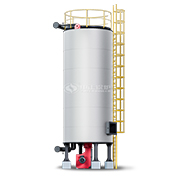
Thermal oil breaks that chain. Because the oil circulates as a liquid rather than boiling, a thermal oil heater can deliver heat in the ~300°C class while the system stays below roughly 10 bar. That is why asphalt plants, plywood presses, chemical reactors, and frying lines specify thermal oil rather than fighting steam physics.
The trade-off is that the oil itself needs care — it degrades if overheated, and the system must be kept tight. But for genuinely high-temperature duty, it is the practical rung.
how to decide
Start from the highest temperature your process genuinely needs, not the highest you might someday want. Below the boiling point of water, look at hot water. In the middle band where most cooking, sterilizing, and drying happens, steam is almost always right. Approaching the 300°C class, thermal oil earns its keep.
Mixed plants are common — a food factory might run steam for retorts and hot water for sanitation — and the answer can be two smaller units rather than one compromise machine. Zozen Philippines supplies all three rungs, from WNS and SZS steam boilers to hot water units and YQW/YLW thermal oil heaters, so the recommendation follows your process rather than a catalog. If you can describe what you make and at what temperature, our quote page walks through exactly those questions.
Quick questions
Why use thermal oil instead of steam for high temperatures?
Steam temperature is tied to pressure: reaching roughly 300°C with steam would require extreme pressure and correspondingly heavy, costly equipment. Thermal oil circulates as a liquid, so a thermal oil heater can deliver heat in the ~300°C class while operating below roughly 10 bar. That makes it the practical choice for high-temperature processes like pressing, frying, and certain chemical reactions.
Can a hotel or hospital use a hot water boiler instead of a steam boiler?
Often, yes. If the heat is for guest rooms, laundry, kitchens, washing, and sanitation — duties below the boiling point of water — a hot water boiler is usually simpler and cheaper to run than steam. Hospitals that also sterilize instruments on site may still need a steam boiler for that duty, sometimes alongside a hot water unit.
Which heating medium do most factories in the Philippines use?
Steam, by a wide margin. Most industrial processes — cooking, sterilizing, drying, dyeing, distilling — need heat in the band that saturated steam delivers naturally, which is why food manufacturing, textile, and pharmaceutical plants run on steam boilers. Hot water serves hotels and hospitals, while thermal oil serves the smaller group of processes needing roughly 300°C.
Talk this through with an engineer
Tell us your process and fuel — we'll reply within one business day.