
Rice Hull as Boiler Fuel: A Practical Guide for Philippine Mills
Fuel & Savings · 5 min read ·
The short answer
Rice hull is a workable, low-cost boiler fuel for Philippine mills — it is already on site, and burning it typically costs far less per tonne of steam than diesel. It needs a chain-grate boiler (SZL or DZL class), a fuel-handling setup designed for hull, a daily ash routine, and a backup fuel path for lean months.
Every rice mill in the Philippines faces the same daily question: what to do with the hull. It comes off the mill in volume, it is bulky, and hauling it away costs money. Many mills treat it purely as a disposal problem.
It is also a fuel. Rice hull burns well on the right grate, and a mill that needs steam or heat — for parboiling, drying, or a neighboring process — can turn its waste stream into its energy supply.
why rice hull makes sense as fuel
The economics start from a simple fact: the fuel is already on site. A mill burning its own hull is not exposed to diesel price movements, and heating with biomass typically costs far less per tonne of steam than diesel firing.
This is why plants that displace a diesel-fired boiler with biomass typically see the investment pay back in roughly 6 to 12 months — hedged, as always, on local fuel prices and steam load. For a mill with hull already on hand, the fuel side of that equation is unusually favorable, and the disposal cost you avoid counts as savings too.
what kind of boiler burns rice hull well
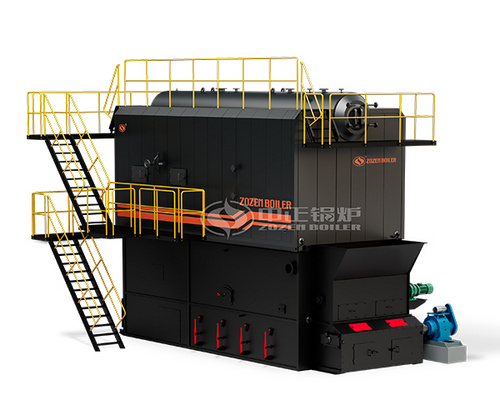
Rice hull is a light, high-ash fuel, and it wants a chain-grate boiler: fuel is spread onto a slow-moving grate, burns as it travels, and drops its ash off the end. The SZL series covers roughly 6 to 35 t/h of steam; the smaller single-drum DZL covers roughly 2 to 10 t/h, which suits many mills.
Feeding matters too. Hull is bulky and flows differently from coal or wood chips, so the fuel-handling arrangement — storage, conveying, feeding — should be designed for hull from the start, not adapted afterward. Keep the stockpile covered: dry fuel burns better, and as a rule of thumb wet fuel spends part of its heat just evaporating its own moisture.
living with the ash
Rice hull leaves more ash than most fuels, so ash removal is a daily routine, not an afterthought. The chain grate discharges it continuously, which keeps the job manageable, but plan the ash path — where it collects, who removes it, where it goes — when you plan the boiler house.
Depending on your area, the ash may even find local takers rather than being pure waste. Ask around before you assume a disposal cost.
pair it with a backup fuel
Milling is seasonal in many areas, and hull supply follows the harvest. A prudent setup keeps a second fuel path: the same chain-grate platform can burn wood chips or other biomass, and many mills keep a small diesel-fired unit as standby.
That N+1 thinking — one more boiler or fuel path than the bare minimum — is common practice wherever downtime is costly, and it means a lean hull month never stops production or drying.
getting from idea to steam
A typical project runs about 60 days of manufacturing from order confirmation, with steam flowing within roughly 5 to 6 months once shipping, installation, and commissioning are done. Operator training happens at commissioning, which matters more for solid fuel than for a diesel burner.
Remember the paperwork: steam boilers fall under the DOLE Occupational Safety and Health Standards, and Rule 1160 requires inspection before first use and at least annually thereafter. Your supplier should prepare the boiler and documents with you.
Zozen has supplied more than 250 boilers across the Philippines, including biomass units in rice-growing provinces, and the products catalog covers the SZL and DZL ranges in detail. The starting point is simply your steam demand and your hull supply.
Quick questions
Can rice hull really replace diesel as a boiler fuel?
Yes, for mills and plants with a reliable hull supply. Rice hull burns well on a chain-grate boiler and typically costs far less per tonne of steam than diesel — especially when the hull is already on site as a milling byproduct. Plants displacing diesel firing with biomass typically see payback in roughly 6 to 12 months, depending on local prices and steam load.
What boiler is best for burning rice hull?
A chain-grate biomass boiler. The SZL series covers roughly 6 to 35 t/h of steam and the single-drum DZL series roughly 2 to 10 t/h, which suits many rice mills. The fuel-handling system — storage, conveying, and feeding — should be designed for hull specifically, because hull is bulkier and flows differently than wood chips or coal.
How is rice hull ash handled?
Rice hull leaves more ash than most fuels, so plan a daily removal routine and a disposal or reuse path from the start. A chain-grate boiler discharges ash continuously off the end of the grate, which keeps the routine manageable. Depending on your area, the ash may have local takers — worth checking before assuming a pure disposal cost.
Talk this through with an engineer
Tell us your process and fuel — we'll reply within one business day.