
Switching from Diesel to a Biomass Boiler in the Philippines
Fuel & Savings · 5 min read ·
The short answer
Plants switch because biomass typically costs far less per tonne of steam than diesel, and projects replacing a diesel-fired boiler typically pay back in roughly 6 to 12 months. The trade-offs are more fuel handling, daily ash removal, and grate maintenance — plus the need to confirm reliable year-round fuel supply before committing.
Talk to any plant owner running a diesel-fired boiler in the Philippines and the conversation lands in the same place: the monthly fuel bill. Diesel is convenient — easy to store, clean to burn, available in every province — but per tonne of steam it is typically the most expensive way to make heat.
Biomass changes that math. Rice hull, wood chips, coconut shell, and bagasse are abundant in many parts of the country, often sold as byproducts rather than refined fuels. In our experience, heating with biomass typically costs far less per tonne of steam than diesel firing.
why plants make the switch
The case is almost always fuel cost. A boiler burns fuel every operating hour, so even a moderate difference in cost per tonne of steam compounds quickly across a year of production. For a plant steaming two or three shifts a day, the fuel line usually dwarfs every other boiler cost, maintenance included.
That is why plants that replace or displace a diesel-fired boiler with biomass typically see the new unit pay for itself in roughly 6 to 12 months. We say typically because everything hinges on your local fuel prices and steam load — which is why we run the payback arithmetic with each customer's own numbers rather than quoting generic savings.
what changes on the plant floor
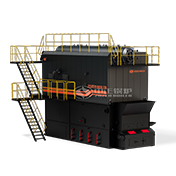
Switching fuels means switching boiler types. Diesel burns in a fire-tube unit like the WNS series; biomass needs a chain-grate design — the SZL series for roughly 6 to 35 t/h of steam, or the single-drum DZL for roughly 2 to 10 t/h — where fuel is fed onto a slow-moving grate and burned as a traveling bed.
Operationally, three things are new. Fuel handling: biomass is bulky, so you need covered storage and a way to keep it reasonably dry. Ash: solid fuel leaves ash that must be removed daily, so plan the ash path early. And grate and refractory care joins the preventive maintenance list alongside the usual tubes and controls.
None of this is exotic — mills across the country have run solid-fuel boilers for decades. But it does mean more labor and attention than a press-the-button diesel burner, and your operators should be trained for it at commissioning.
what to check before you commit
Fuel supply first. Confirm you can source your chosen biomass reliably, year-round, within reasonable hauling distance — supply is local and often seasonal, following the harvests. A boiler that saves money nine months a year and starves for fuel the other three is a bad trade.
Space second: a chain-grate boiler plus fuel storage occupies a larger footprint than a compact diesel unit, so walk the site early. Permits third: steam boilers fall under the DOLE Occupational Safety and Health Standards, and Rule 1160 requires inspection before first use and at least annually thereafter, with the permit to operate renewed. A fuel switch is the right moment to get that paperwork lined up, and a good supplier prepares the boiler and documents with you.
how the switch actually plays out
A typical project runs about 60 days of manufacturing from order confirmation, and most plants are producing steam within roughly 5 to 6 months of ordering once shipping, installation, and commissioning are counted. Operator training happens at commissioning, so your team learns the grate on their own machine.
Many plants keep the old diesel boiler as a standby during and after the transition. That gives you N+1 redundancy — common practice wherever downtime is costly, such as food processing — and a fallback fuel path if biomass supply ever tightens.
Zozen has supplied more than 250 industrial boilers across the Philippines, a good share of them solid-fuel units, and the installations map on the site shows where they run. If you want to see whether the switch works for your plant, the quote page turns your load and fuel details into a tailored proposal in about one business day.
Quick questions
How much can a plant save by switching from diesel to biomass?
There is no single figure — it depends on local fuel prices and steam load. As a general pattern, heating with biomass typically costs much less per tonne of steam than diesel firing, and plants replacing a diesel-fired boiler typically see the new unit pay for itself in roughly 6 to 12 months. A proper estimate uses your own fuel bills and demand profile.
Can I keep my diesel boiler after switching to biomass?
Yes, and many plants do. Keeping the existing diesel unit as a standby gives N+1 redundancy — common practice where downtime is costly, such as food plants — and provides a backup fuel path if biomass supply tightens seasonally. The biomass boiler carries the base load; the diesel unit runs only when needed.
What biomass fuels are commonly available in the Philippines?
Rice hull (rice husk), wood chips, coconut shell, palm shell, and bagasse are the common ones. Availability is local: rice hull near milling areas, bagasse near sugar centrals, coconut shell in coconut-producing regions. Before committing to a biomass boiler, confirm a reliable year-round supply of your chosen fuel within reasonable hauling distance.
Talk this through with an engineer
Tell us your process and fuel — we'll reply within one business day.