
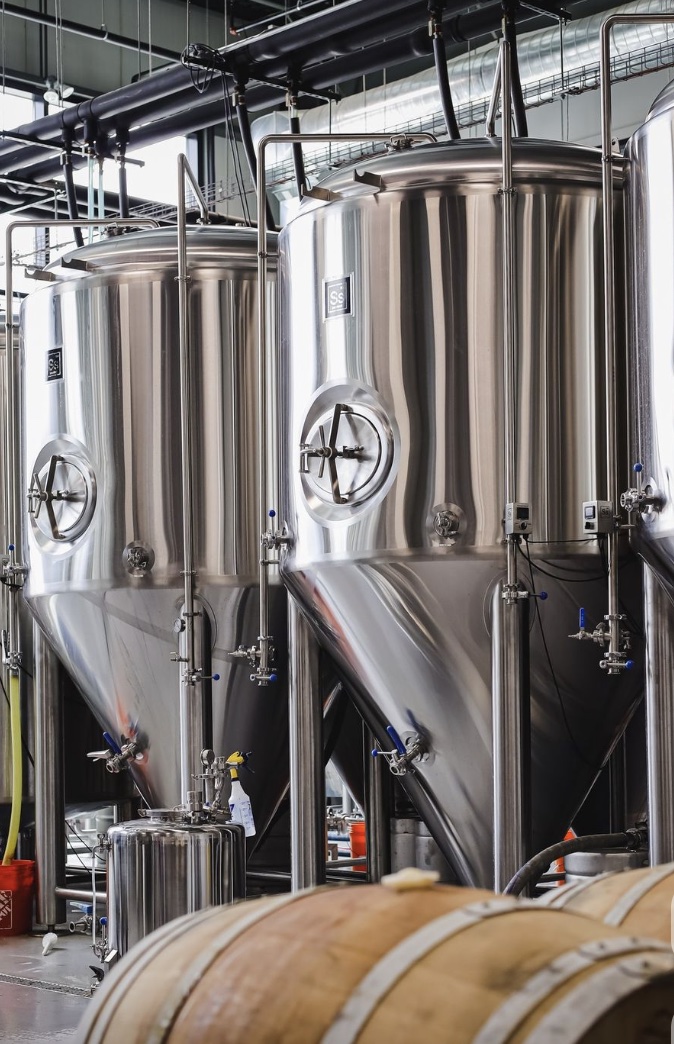
Every stage of brewing and distilling is a heat process wrapped around a fermentation. Breweries mash grain in hot liquor, boil wort for an hour or more in steam-jacketed kettles, then pasteurize and hot-wash bottles, cans and kegs. Distilleries run their stills — pot or column — almost entirely on steam, where smooth, controllable heat input is literally the difference between a clean spirit and scorched wash.
Steam demand swings hard with the brew schedule: a wort boil can triple the plant's draw for ninety minutes, then fall back to washdown levels. Packaged WNS boilers with wide-turndown modulating burners handle this rhythm gracefully, and their large water plant rides the kettle surges without pressure collapse. Craft-scale operations often start with a compact skid-mounted unit — boiler, feed system and controls in one frame that fits beside the brewhouse.
Larger Philippine beverage plants — and distilleries processing local molasses — frequently add a biomass or coal-fired base-load boiler once volumes justify it, keeping the gas unit for peaks. Clean, dry steam also protects the product: in this industry the boiler house is genuinely part of the recipe.