
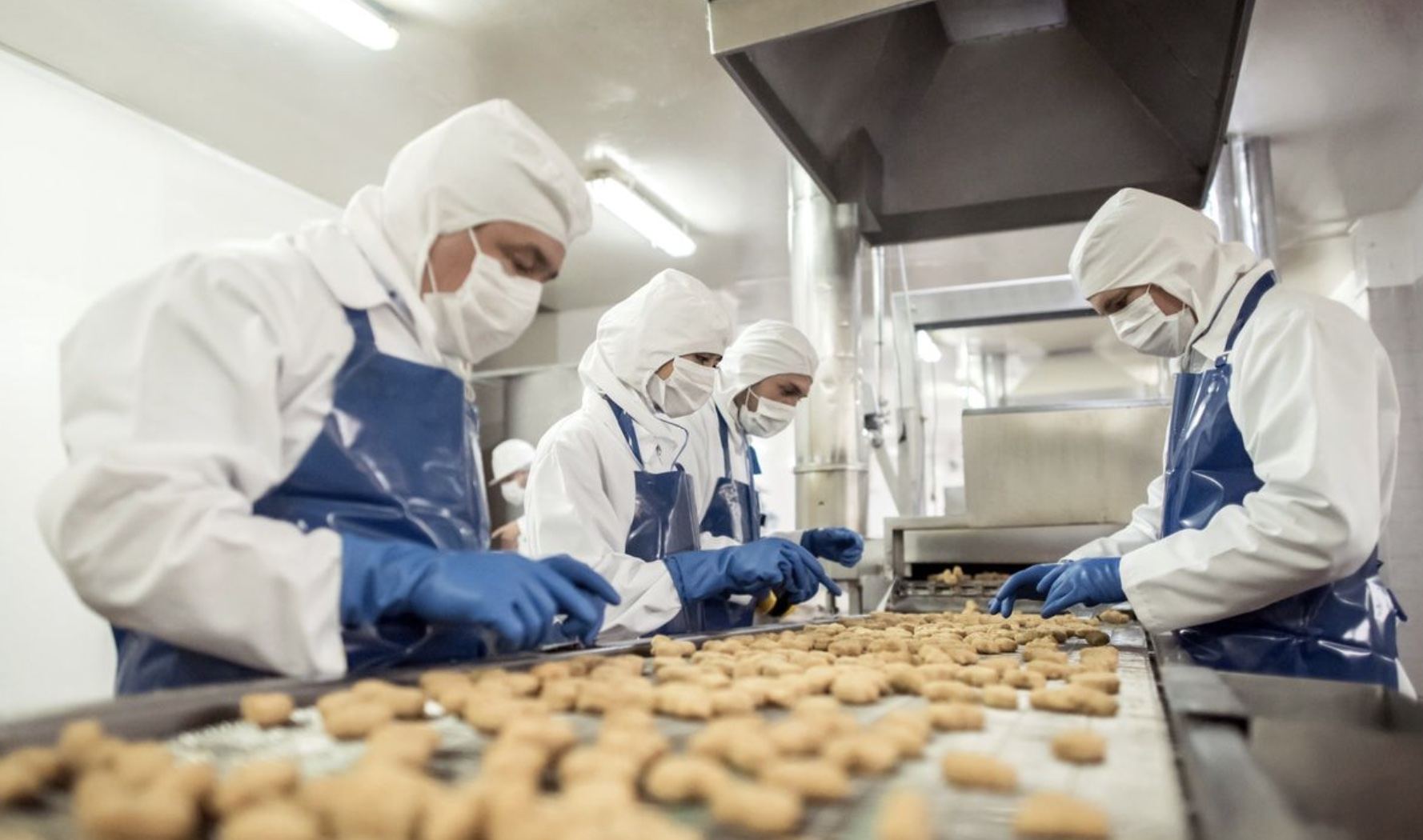
Few industries lean on steam as heavily as food and beverage. Steam cooks, blanches and pasteurizes; it sterilizes cans in retorts, powers evaporators that concentrate juices and sauces, and supplies the hot water and clean-in-place (CIP) systems that keep production lines hygienic. Because the steam often contacts food surfaces or packaging indirectly, plants demand exceptionally stable pressure and dry, clean steam — a wet or fluctuating supply shows up immediately as inconsistent cook times and rejected batches.
Demand in a food plant is also famously spiky: a retort bank opening or a washdown cycle can double the steam draw in seconds. Fire-tube packaged boilers like the WNS series suit this well — their large water volume acts as a steam accumulator, riding through peaks without pressure dips — while modulating gas burners track the swings efficiently. In the Philippines, canneries, beverage bottlers, snack manufacturers and sugar-based processors typically run one or two 4–15 t/h units with N+1 redundancy, because an unplanned boiler stop means an entire production shift is lost.
Where a plant generates its own combustible by-products — coconut shell, rice husk from an adjacent mill, bagasse — a biomass-fired SZL boiler can slash fuel cost dramatically, turning waste disposal into steam supply. Many operators pair a biomass base-load boiler with a gas-fired unit for trim and backup: the lowest cost per tonne of steam with full reliability.